
Textile in movement and variation
Textile in movement and variation
from piano to mezzo forte
On the Good Use of Slowness, Pierre Sansot :
“[Slow life] is recognisable as the refusal to rush time, or be harried by it, while increasing our capacity to accept the world without forgetting ourselves in the process.” ¹
From Du bon usage de la lenteur (On the Good Use of Slowness), Pierre Sansot ¹
Textile art as urban weaving
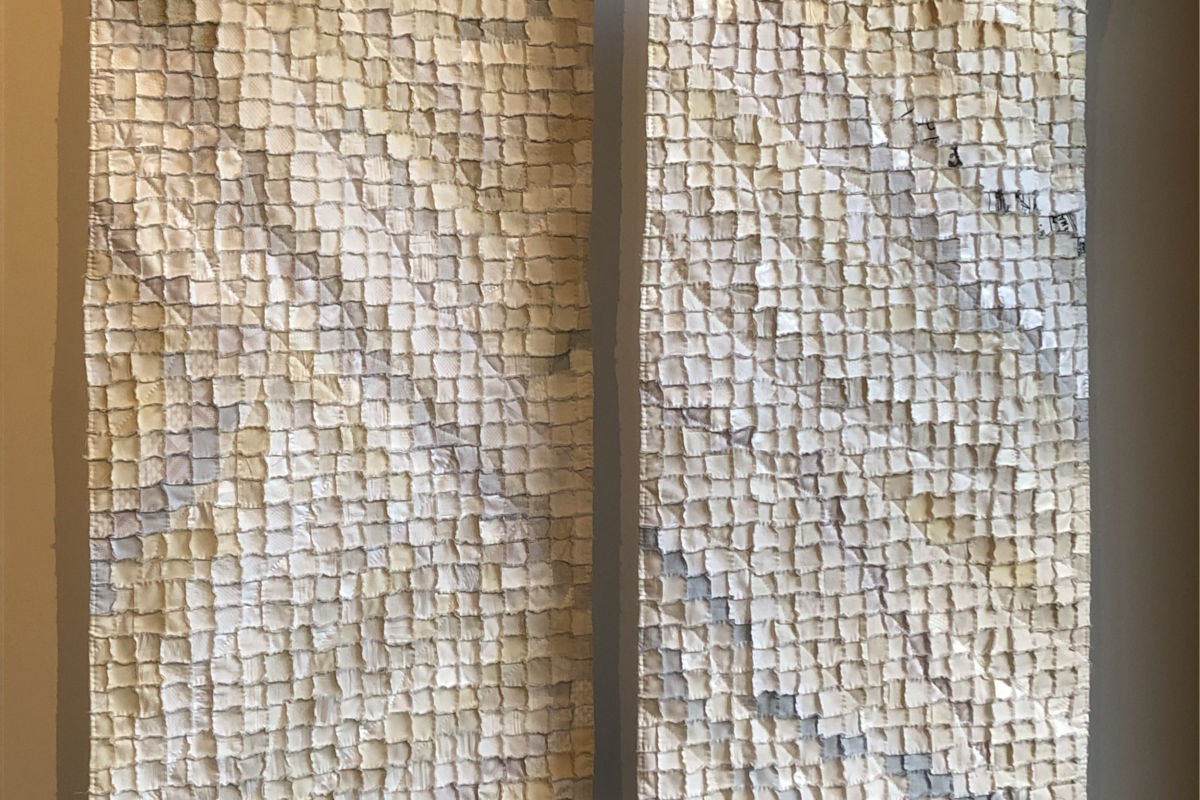
The etymology of the French verb penser (to think, from which we have derived pensive) stems from the Latin pensare (to weigh, or gauge weight). As such to think through a form, we need to produce an image to be materialised after carefully reviewing usage. There are no cities without city planning, without incorporating various elements: dwelling-places, shops, cultural centres, places of worship and transport networks including roads, pavements etc, each one as real as the next. It takes time to shape a city. Likewise, textile art is the culmination of a form using fabrics, each with their own texture, colour and dimension, assembled to last, requiring a tried-and-tested strategy, method, and lots of time. Time that both gives free rein to the imagination and brings the desired form to material fruition, a great challenge requiring all-essential, deliberate slowness.
Chronology
– Collect the fabrics, sorting them carefully in order to quickly locate those needed for a project. Hundreds of samples to be stored.
– Develop a form, imagining it, designing it, drawing it, in other words conferring reality, much as a composer sketches her sarabande onto staves.
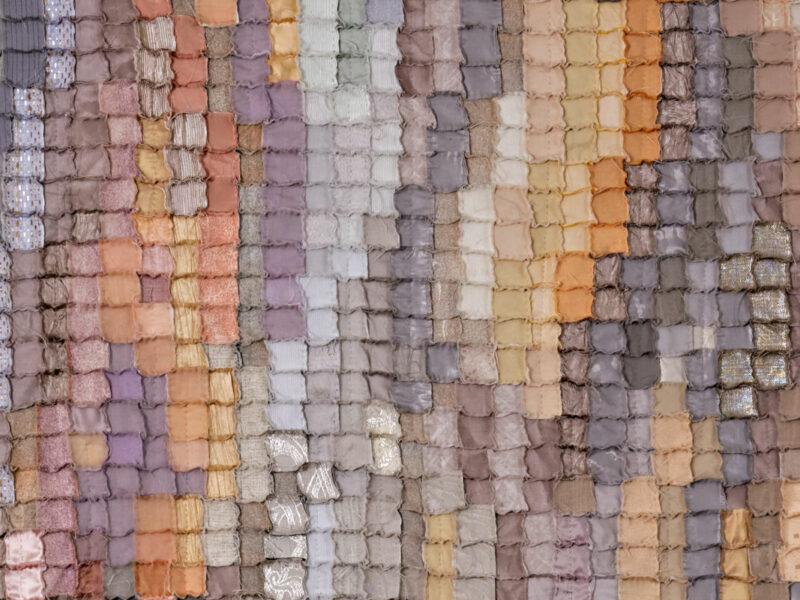
– Contemplate the fabrics, sorting them into different textures and colours, piling them up, cutting them out (to exact measurements), organising them very strictly according to colour, building up a library. Also, come up with a line of force to bring the project into being (the black & white line of force defines the graphics, as a pretext to showcase colour).
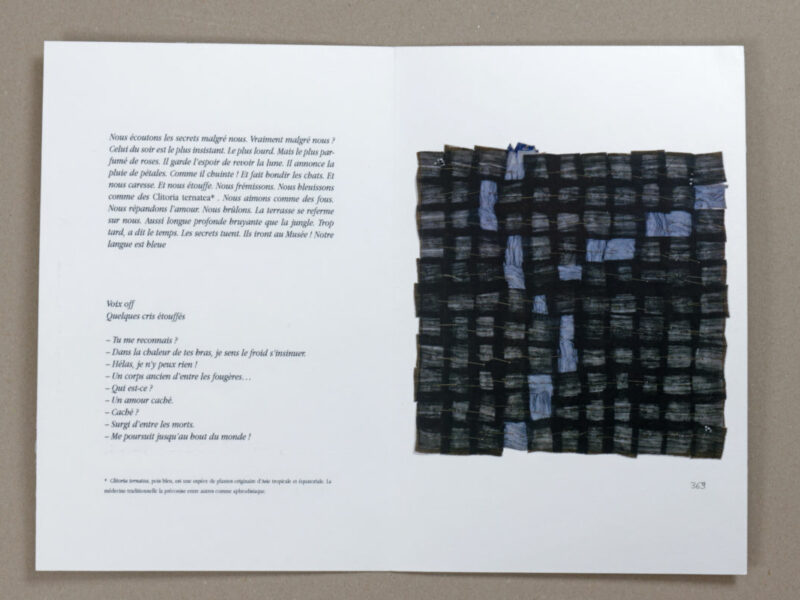
– Then let the form take shape, placing squares first on a table then on the floor, for the work to spread out and inhabit its space.
– All the while ironing each one, assembling and carefully sewing them together, to satisfy both hands and eyes: years, days, hours spent looking forward to seeing what the hand has crafted for the eyes once the work has been completed: from hand to eye, matter to spirit, constant back- and forth-ing dictated by creation to exalt form.
– No longer measuring time, letting it spool to the pace of careful, content execution.
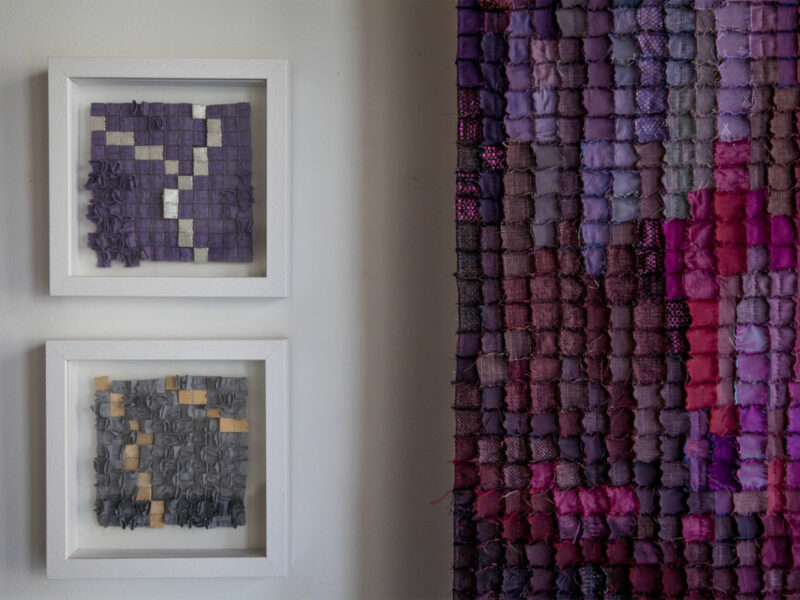
– Once the little squares have all been assembled, set the whole up loosely on a frame to preserve its dimensions, give impetus. Quilt-stitch it to set it billowing, to give volume to this blended weave, enticing your eyes to go with the flow, the work’s line of force and vanishing point.
Embracing space, enlivening it, such is Sabine Cibert’s calling.
Françoise Chabert
philosopher and anthropologist
October 2020